


Home  |  Contact Us
Renew NYCLMDC Lower Manhattan Development Coporation
The Plan for Lower Manhattan
News and Events
Projects and Programs
About Us
Search Archive
Go
General Project Plan
World Trade Center Towers
Memorial & Museum
Residential Growth
Transportation
Waterfront Access
Press Releases
Events Listing
Speeches
Image Gallery
Archives
Fulton Street
Chinatown
Waterfronts
Parks
Capital Projects
Opportunities for Business
Stabilizing Business
Cultural & Civic
Institutions
130 Liberty Street
Staff
Board
Board Meetings
HUD Funding
The Plan for Lower Manhattan
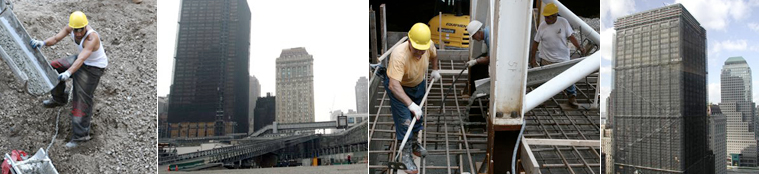
A View of the World Trade Center Site from the Hudson River.

The Plan for Lower Manhattan
The Plan for Lower Manhattan > 130 Liberty Street > Frequently Asked Questions
Frequently Asked Questions

The Deutsche Bank Building at 130 Liberty Street

  • How will the 130 Liberty Street building be cleaned and deconstructed?
  • What is the sequencing of the deconstruction plan and what is the current timeline for activities?
  • How will the LMDC ensure that contaminants are not released from the building?
  • Will there be a plan for residents and workers that provides for emergency procedures and contact information?
  • What measures or precautions will be taken to protect nearby residents during the deconstruction process?
  • How will LMDC keep the public informed throughout the project?
  • What type of testing will occur during deconstruction activities?
  • Will there be independent testing and monitoring conducted?
  • How will the deconstruction activities affect residential areas?
  • Why are there so many agencies involved in this project? Who are they and what is their role?

Methodology and Timing

How will the 130 Liberty Street building be cleaned and deconstructed? Top ^
The proposed Phase I Deconstruction Plan submitted for review to the government regulators provides that the 130 Liberty Street building will be deconstructed in two phases:
  • Phase I will involve abatement of identified interior Asbestos Containing Building Materials (ACBM), cleaning and removal of World Trade Center (WTC) dust within the building, and "soft strip and interior gut" of most interior non-structural materials, as well as the erection of the tower crane and hoist on the site. Phase I is scheduled to begin this winter (2004-2005).
  • Phase II will include the abatement of identified Asbestos Containing Building Materials (ACBM) associated with the exterior of the structure, the disassembly and removal of some remaining interior non-structural materials, removal of rooftop mechanical equipment and the remaining building envelope, and then finally the structural components of the building.
Phase I has been further subdivided into two stages known as Phase IA and Phase IB:
  • Phase IA will include abatement of interior Asbestos Containing Building Materials (ACBM), dust cleaning, and removal of building components needed to complete the dust cleaning and asbestos abatement.
  • Phase IB will include removal of interior gypsum wall board partitions, sprayed-on fireproofing, bathroom fixtures, integral shelving and components and remaining small scale mechanical, electrical and plumbing components. These Phase IB activities are commonly referred to as "soft strip and interior gut". After the completion of Phase IA and Phase IB, almost all interior non-structural elements will be removed, leaving the exterior walls and a structural shell.
The Deconstruction Plan details the methodologies and the plans that will be used to deconstruct the building at 130 Liberty Street during Phase I. This plan is divided into seven sections. These sections include:
  • Section 1: Waste Management Plan: This plan describes the process to classify and dispose of waste streams that will be generated as part of the 130 Liberty Street Deconstruction Project;
  • Section 2: Ambient Air Sampling Program: This plan provides a methodology to monitor for contaminants of concern at monitoring locations around the perimeter of the 130 Liberty Street Building;
  • Section 3: Emergency Action Plan: This plan provides the initial response steps and identifies roles and responsibilities of LMDC and Contractor during an emergency situation to protect the health and safety of onsite workers and the surrounding community;
  • Section 4: Safety Plan: This section provides the safety plans for the Contractor, as well as each subcontractor including CDI, LVI, and Weston; (under review by LMDC; to be provided at a later date)
  • Section 5: Health and Safety Plan: This plan presents the practices and procedures that the contractors will follow during the deconstruction of the 130 Liberty Street Building;
  • Section 6: Asbestos Abatement Plan: This plan provides a description of the activities necessary to carry out the abatement of Asbestos Containing Building Materials (ACBM) and the cleaning and removal of WTC dust;
  • Section 7: Soft Strip/Interior Gut Plan: This plan comprises Phase IB of the deconstruction process. This plan details the deconstruction, removal, and disposal of interior, non-structural materials not removed during Phase IA.
What is the sequencing of the deconstruction plan and what is the current timeline for activities? Top ^
The goal is to complete the work in 11 sequences beginning with the top 4 floors and continuing downward in 4 floor sections towards the basement. The sequencing and the schedule of these activities will be finalized after approval of the plan.

Development of the two-phased Deconstruction Plan was based on the results of the Initial Building Characterization Study Report that was released for public review and comment in September 2004. The information provided in the current Deconstruction Plan addresses the Phase I work only. A Phase II plan will be developed and presented prior to the start of that work.

The draft Phase I plan is available for public viewing on LMDC's website at www.RenewNYC.com. Please note that the 130 Liberty Street Draft Phase I Deconstruction Plan is currently under review by the regulators and subject to change.

Containment

How will the LMDC ensure that contaminants are not released from the building? Top ^
The proposed Deconstruction Plan incorporates results and recommendations from the September 14, 2004 Initial Building Characterization Study Report. Therefore, the proposed Deconstruction Plan does address contaminants identified in the Study and is designed to be:
  • Protective of the health and safety of the workers on this project and the neighboring community;
  • Compliant with all applicable rules and regulations;
  • Consistent with the findings of the "Initial Building Characterization Study Report" that was released for public comment in September 2004; and
  • Consistent with current industry standard practices.
The Phase IA work activities (cleaning and asbestos abatement) will begin first and will be largely undertaken from the top of the building down. All necessary asbestos abatement will be conducted concurrent with the dust cleaning activities.

During Phase IA activities, LMDC's contractors and subcontractors will be enclosing the work area and establishing negative air pressure to ensure potential contaminants remain in the building. Once negative air pressure has been achieved, licensed abatement subcontractors will perform limited soft strip to create an open work area, followed by the removal of Asbestos Containing Building Materials (ACBM). Following this will be a thorough cleaning to remove any fibers that may have been released during the abatement of ACBM, and to remove the settled WTC dust.

Before any work is performed, the stairwells, elevator shafts and all other vertical connections between floors will be sealed properly in order to prevent dust from reentering spaces/floors already cleaned and cleared. These vertical connections (stairwells and shafts) will be cleaned last once all floors of the building have been cleaned.

Once the Phase IA cleaning and abatement activities have progressed enough, a safe "buffer" zone will be established to allow the Phase IB work activities to begin. At this point, the Phase IB activities (soft strip and interior gut) will be initiated. There will always be a safe "buffer" zone between these activities to ensure that areas are properly cleaned before materials are removed. All work will be stopped in the event that excessive airborne fibers are detected outside the containment area, if a break is detected in the containment barriers, or if there is loss of negative air pressure. In this event, appropriate correction action will be taken immediately.

Protective Measures

Will there be a plan for residents and workers that provides for emergency procedures and contact information? Top ^
Section 3 of the Deconstruction Plan is the proposed Emergency Action Plan (EAP). This plan was developed using comments received from the public during the 30-day public comment period on the Initial Building Characterization Study Report that began on September 14, 2004 and ended on October 13, 2004.

The purpose of the EAP is to outline roles and responsibilities of LMDC, its contractors, and appropriate emergency personnel and first responders, in the event of an emergency. The plan identifies potential emergencies and appropriate responses in the event that any incident occurs during the Phase I deconstruction process. The plan also identifies contact information for LMDC and its Contractor, as well as URS Corporation, who will be providing construction oversight on behalf of the LMDC.

The Emergency Action Plan also contains pre-emergency planning activities. Prior to commencement of work, LMDC's Emergency Coordinator and the LMDC will meet with the FDNY, NYPD, OEM, and Battery Park City Certified Emergency Response Team (CERT) to present the EAP and discuss any required collaborative preparation as well as ensure they are informed of the existing building conditions. Throughout deconstruction activities the LMDC Emergency Coordinator will conduct regular emergency preparedness meetings with on-site personnel to ensure they are provided with the most up-to-date information and procedures.

  • Building Evacuation;
  • Site Evacuation;
  • Community Notification;
  • Emergency Response Communication Chart;
  • Emergency Contact Numbers for Local Authorities; and
  • Evacuation Assembly Area.
(This list is not inclusive of all elements of the EAP.)

LMDC will continue to coordinate with members of the community and stakeholder groups to identify how residents and workers will be notified in the event of emergency situations.

What measures or precautions will be taken to protect nearby residents during the deconstruction process? Top ^
LMDC and Contractor will utilize extensive measures to protect the health and safety of residents and workers. In addition to those measures discussed in response to other FAQs above, these measures include:
  • A plywood construction fence to restrict site access;
  • Sidewalk closures and/or installation of overhead protection;
  • 24/7 security guards on-site (fire watch activities, general site security around the building perimeter, building access, etc.);
  • External Air Monitoring; and
  • Waste Characterization.
The licensed on-site Contractor Construction Safety Officer will be responsible for ensuring these protective measures remain intact and implementing any corrective measures.

Public Involvement

How will LMDC keep the public informed throughout the project? Top ^
LMDC will be hosting a public information session in January to provide the community with an overview of the Phase I Deconstruction Plan and to hear community comments and questions. A formal notice of this meeting will be given once the date is confirmed. In the meantime, the public is encouraged to check LMDC's website at www.RenewNYC.com for project updates.

Contractor's General Superintendent will also participate in regular neighborhood meetings to directly address the concerns and questions of the surrounding community.

Additionally, the community may sign up for 130 Liberty Street E-Updates, to receive updates and to keep informed on the progress of the 130 Liberty Street Deconstruction Project. Community members are also able to submit electronic comments at this same website. For more information, please contact:

Kate Millea, Community Liaison
Community Development, Programs and Relations
Lower Manhattan Development Corporation
1 Liberty Plaza
20th Floor
New York, NY 10006
212-962-2300
kmillea@renewnyc.com

Testing – Methodology

What type of testing will occur during deconstruction activities? Top ^
Testing proposed during deconstruction activities will focus primarily on air monitoring and waste stream testing. Section 2 of the Deconstruction Plan outlines the Ambient Air Monitoring Plan. The program consists of:
  • Utilizing meteorological instrumentation to record wind speed, wind direction and other pertinent conditions;
  • Conducting real-time monitoring for potential off-site migration of emissions using continuous direct read ambient air monitors; and
  • Conducting integrated air sampling for the following target compounds: Particulates as Total Suspended Particulates (TSP), metals as TSP, asbestos, silica, mercury, PAH's (polyaromatic hydrocarbons) Dioxins & Furans (D/Fs), and PCBs.
Section 1 of the Deconstruction Plan outlines the Waste Management Plan. The goal of the plan is to classify the waste streams that will be generated as part of the deconstruction project and identify proper handling, packaging, labeling, transportation, and disposal methods. At this time, anticipated waste streams include:
  • Settled WTC dust;
  • Asbestos Containing Building Materials (ACBM);
  • Deconstruction generated waste including suspended ceiling tiles, carpet, sprayed-on fireproofing, fiberglass insulation, and frames; and
  • Miscellaneous items such as light ballasts, lamps, refrigerants, Halon fire suppression systems, and batteries.
LMDC is currently sampling the exterior of the building, as well as the interstitial spaces within, and awaiting laboratory results. The results of this sampling effort will form the basis of the Phase II Deconstruction Plan. Once final quality assurance data reviews are complete, all characterization and monitoring results are available on the LMDC website at www.RenewNYC.com.

Will there be independent testing and monitoring conducted? Top ^
Internal air monitoring will be conducted regularly as part of normal procedures outlined in the worker health and safety plans governing each contractor and subcontractor. While this work is occurring, Contractor will have ample deconstruction field oversight as well as environmental project monitoring. Some of these activities include:
  • The use of engineering controls such as negative air during cleaning and abatement activities.
  • The collection of air samples:
  • On workers performing the activities,
  • In the immediate vicinity of the work,
  • In the building but outside the immediate area of the work and
  • At various locations and elevations outside the building.
  • Conducting visual inspections and clearance air samples to document the proper completion of designated work activities in all required areas.
These measures are in addition to the continuing independent ambient air monitoring efforts conducted in the community by LMDC's environmental consultants. The results of current air monitoring efforts by LMDC's environmental consultants are posted on LMDC's website and are updated regularly.

Additionally in September 2004, LMDC retained the services of Kroll Associates as an independent integrity monitor. Kroll's role is to monitor compliance; prevent fraud, cost abuse, and corruption; review plans, policies and procedures to identify and assess risk; and design and implement a corruption prevention program. Kroll's staff is an integral part of the project team. In this role, Kroll will assist LMDC in assuring that environmental testing is conducted and reported properly in accordance with approved plans.

Community Health/ Environmental Protection

How will the deconstruction activities affect residential areas? Top ^
LMDC is committed to minimizing project impacts to the surrounding community. The deconstruction of the 130 Liberty Street building will be completed in compliance with the rules and regulations that govern all construction activities in New York City, including the recently passed Coordinated Construction Act. Most of the Phase I activities will be occurring within the confines of the building, which means that the curtain wall of the building will serve as a natural barrier for any noise and vibration. The hours of operation for Phase I will be 7:00 AM to 4:00 PM for all trades except elevator operators who will work from 6:30 AM to 4:00 PM. LMDC will also implement general construction controls, and require that all contractors and subcontractors use ultra-low sulfur fuel, thereby reducing the amount of air pollutants released.

Regulatory Agencies

Why are there so many agencies involved in this project? Who are they and what is their role? Top ^
The LMDC, the owner of the building at 130 Liberty Street is a joint State-City corporation governed by a Board of Directors appointed by the Governor of New York and by the Mayor of New York. Furthermore, the LMDC is funded by a Community Development Block grant from the U.S. Department of Housing and Urban Development. LMDC will comply with all applicable, city, state and federal regulations regarding the deconstruction of the building.

The LMDC is submitting the Deconstruction Plan to key regulatory agencies including;
  • United States Environmental Protection Agency;
  • The Office of Occupational Health and Safety;
  • New York State Department of Labor;
  • New York City Department of Environmental Protection; and
  • New York City Department of Buildings
These agencies will review the Deconstruction Plan for compliance with their respective regulatory requirements and submit comments to the LMDC prior to any work being done at the site.

The LMDC also consults with:
  • New York State Department of Transportation;
  • New York City Department of Transportation;
  • New York State Department of Environmental Conservation;
  • New York State Department of Health;
  • New York City Department of Health and Mental Hygiene; and
  • New York City Department of Sanitation.
The LMDC works with the above agencies to coordinate adherence to regulatory requirements as well as develop programs that minimize impacts to the surrounding community.
Resources
Learn More
General Project Plan
World Trade Center Towers
Memorial & Museum
Residential Growth
Transportation
Waterfront Access
Planning Documents and Environmental Documents
Section 106 Process
The Plan for Lower Manhattan | News & Events | Projects & Programs | About Us
©2002-07 Lower Manhattan Development Corporation | Privacy Policy | Home | Contact Us | Search